Introduction
Walk into any luxury hotel lobby, high-end boutique, or thoughtfully designed home, and you’ll likely notice a floor that commands attention — not through loudness, but through elegant geometry. That subtle yet powerful visual pull often comes from chevron flooring, a pattern so timeless it has graced European palaces for centuries yet feels remarkably fresh in today’s contemporary interiors.
What makes chevron flooring so captivating? It’s the continuous V-shaped pattern that creates movement, depth, and sophistication in ways standard plank layouts simply cannot match. Whether you’re renovating your home, designing a commercial space, or simply exploring flooring options, understanding chevron’s unique characteristics, installation requirements, and design possibilities will help you decide if this classic pattern belongs in your project.
This comprehensive guide covers everything you need to know about chevron flooring — from its historical origins and pattern variations to material options, installation techniques, maintenance practices, and real-world applications. By the end, you’ll have the expert knowledge to confidently choose, install, and care for chevron flooring that elevates any space from ordinary to extraordinary.
Let’s explore why this centuries-old pattern continues to dominate modern interior design.
What Is Chevron Flooring?
Before diving into the details, let’s establish exactly what defines chevron flooring and what sets it apart from other patterns.
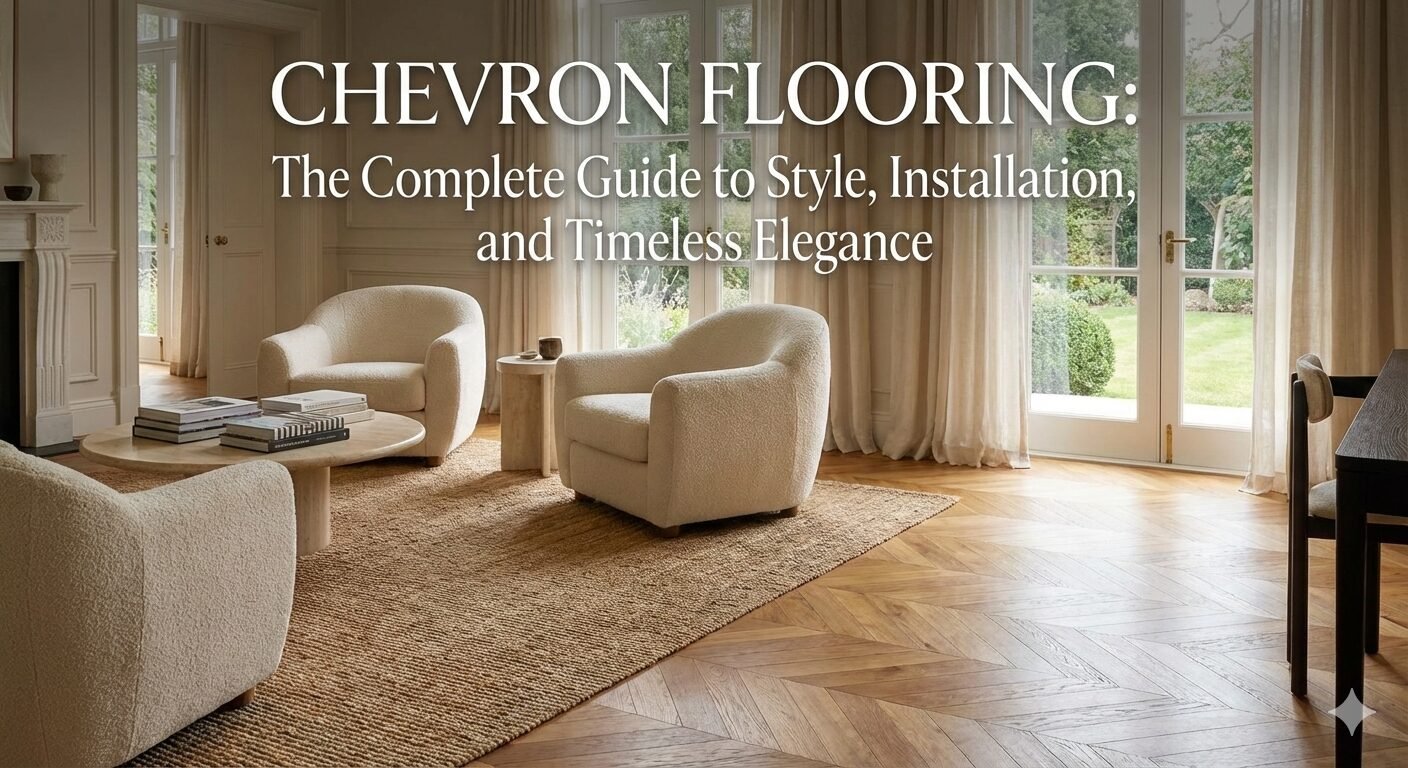
Chevron flooring is a distinctive pattern where rectangular flooring planks or tiles are cut at precise angles — typically 30, 45, or 60 degrees — and arranged to form continuous V-shaped zigzag patterns across the floor. The defining characteristic: planks meet point-to-point at their angled ends, creating perfectly aligned, unbroken chevrons that flow continuously across the entire surface.
The Key Characteristics
Angled End Cuts: Unlike standard rectangular planks, chevron pieces are precision-cut at matching angles on each end.
Point-to-Point Installation: Planks connect at their tips, forming perfect V points throughout the pattern.
Continuous Pattern Flow: The zigzag pattern runs uninterrupted, creating strong directional movement.
Perfect Symmetry: When properly installed, chevron creates mathematically precise geometric repetition.
Historical Context
Chevron patterns have adorned floors since at least the 16th century, reaching peak popularity in French palatial architecture during the reign of Louis XIV. The Palace of Versailles features extensive chevron parquet flooring, establishing it as a symbol of refined taste and craftsmanship — associations that persist today.
According to the Victoria and Albert Museum in London, parquet flooring patterns like chevron became widespread across Europe during the 17th century as status symbols demonstrating wealth and access to skilled artisans (V&A Museum, 2023).
Chevron vs. Herringbone: Clearing Up the Confusion
The terms “chevron” and “herringbone” are frequently used interchangeably, even by flooring professionals. However, they are distinctly different patterns that create different visual effects.
| Feature | Chevron | Herringbone |
|---|---|---|
| Plank End Cuts | Angled (30°, 45°, or 60°) | Rectangular (90°) |
| How Planks Meet | Point-to-point at angled ends | End-to-side at right angles |
| Pattern Appearance | Continuous, unbroken V’s | Broken, staggered zigzag |
| Visual Effect | Formal, structured, linear flow | Organic, traditional, slightly irregular |
| Installation Complexity | More complex (precision angle cuts required) | Complex but slightly more forgiving |
| Material Waste | Higher (12-15% waste) | Moderate (8-12% waste) |
| Historical Origin | French palatial design | Roman brick patterns |
| Modern Perception | Contemporary luxury | Classic European charm |
Visual Identification
Chevron: Imagine a series of perfect arrows pointing forward. Each plank’s end is cut at an angle, and when two planks meet, they form a crisp, clean point with no offset.
Herringbone: Imagine bricks laid at angles. Each plank has rectangular ends, and they meet in a staggered pattern where one plank’s end butts against another plank’s side, creating small broken lines at each junction.
Which Should You Choose?
Choose chevron if you want:
- Maximum visual impact and modern sophistication
- Perfect geometric precision
- Strong directional flow
- A more formal, structured aesthetic
Choose herringbone if you prefer:
- Softer, more traditional European character
- Slightly easier installation
- Less material waste
- A handcrafted, artisan feel
Both patterns are beautiful — the choice comes down to personal preference and the overall design vision for your space.
Materials Used for Chevron Flooring
Chevron patterns can be created with various flooring materials, each offering distinct advantages and aesthetic qualities.
1. Hardwood Chevron Flooring
Materials: Oak, walnut, maple, hickory, teak, ash, cherry
Types:
- Solid hardwood: Single piece of wood throughout (typically 18-20mm thick)
- Engineered hardwood: Hardwood veneer (2-6mm) bonded to plywood or HDF core
Benefits:
- Authentic, timeless appearance
- Natural warmth and character
- Can be refinished multiple times (solid: 5-7 times; engineered: 1-3 times)
- Adds significant property value
Considerations:
- Requires climate control (40-60% humidity)
- Higher cost than synthetic alternatives
- Susceptible to water damage (especially solid wood)
- Professional installation strongly recommended
Best For: Residential luxury projects, heritage restorations, high-end commercial spaces
2. Luxury Vinyl Tile (LVT) Chevron Flooring
Materials: Vinyl with photographic wood, stone, or tile patterns
Types:
- Rigid core (SPC): Stone Plastic Composite with limestone powder
- Flexible core (WPC): Wood Plastic Composite with foamed core
- Glue-down: Thin, flexible tiles adhered to subfloor
Benefits:
- 100% waterproof
- Extremely durable and scratch-resistant
- Easy maintenance
- Cost-effective
- DIY-friendly installation (click-lock systems)
- Realistic wood appearance with modern technology
Considerations:
- Cannot be refinished
- Less prestigious than authentic hardwood
- Some products may off-gas VOCs (choose certified low-emission products)
Best For: Kitchens, bathrooms, basements, commercial spaces, budget-conscious projects
According to Grand View Research, the global LVT market was valued at USD 24.6 billion in 2023 and continues growing at 7.2% annually, driven partly by patterned products like chevron that combine aesthetic appeal with practical performance (Grand View Research, 2024).
3. Tile Chevron Flooring
Materials: Ceramic, porcelain, natural stone (marble, limestone, travertine)
Benefits:
- Completely waterproof and virtually indestructible
- Ideal for wet areas (bathrooms, pool surrounds)
- Cool underfoot (desirable in hot climates)
- Available in countless colours and finishes
- Never needs refinishing
Considerations:
- Cold and hard underfoot (consider with underfloor heating)
- Heavy (structural considerations for upper floors)
- Professional installation essential
- Grout lines require periodic maintenance
- More expensive than vinyl options
Best For: Bathrooms, entryways, luxury outdoor spaces, Mediterranean or contemporary designs
4. Laminate Chevron Flooring
Materials: Photographic layer over HDF core with protective wear layer
Benefits:
- Affordable alternative to hardwood
- Realistic wood appearance
- Scratch and fade-resistant
- Relatively easy DIY installation
- Low maintenance
Considerations:
- Not waterproof (water-resistant versions available)
- Cannot be refinished
- Can feel hollow underfoot without quality underlayment
- Lower perceived value than hardwood
Best For: Budget renovations, rental properties, temporary installations
Popular Chevron Flooring Styles and Finishes
Beyond material choice, chevron flooring offers numerous stylistic variations:
By Color Palette
Light and Bright:
- Whitewashed oak
- Blonde maple
- Pale ash with limed finish
- Effect: Makes spaces feel larger, airier, Scandinavian-inspired
Mid-Tone Natural:
- Natural oak (honey tones)
- Light walnut
- Natural teak
- Effect: Warm, versatile, complements most furniture and décor
Rich and Dark:
- Dark walnut
- Espresso-stained oak
- Smoked or ebonized finishes
- Effect: Dramatic, sophisticated, formal luxury
Grey Tones:
- Grey-washed oak
- Silver ash
- Charcoal-stained hardwood
- Effect: Contemporary, cool, pairs beautifully with modern minimalist design
By Surface Texture
Smooth/Polished:
- High-gloss lacquer finish
- Best for: Formal spaces, contemporary design, showcasing wood grain clarity
Matte/Natural:
- Oil or hardwax finishes
- Best for: Casual elegance, Scandinavian or organic interiors
Wire-Brushed:
- Mechanical brushing highlights grain texture
- Best for: Rustic, farmhouse, or transitional styles
Hand-Scraped:
- Artisan-style surface irregularities
- Best for: Traditional, Old World, or reclaimed wood aesthetics
Distressed/Aged:
- Intentional wear marks, colour variation
- Best for: Vintage, shabby chic, or eclectic interiors
By Chevron Angle
30-Degree Chevron:
- Creates gentler, more elongated V shapes
- Subtler visual impact
- Elongates spaces more dramatically
45-Degree Chevron:
- Classic, most common angle
- Balanced visual impact
- Versatile across room sizes
60-Degree Chevron:
- Creates sharper, more pronounced V shapes
- Bolder visual statement
- Works best in larger spaces
By Plank Dimensions
Standard Width (90-120mm):
- Traditional appearance
- More pattern repetition
- Suitable for smaller rooms
Wide Plank (150-200mm+):
- Contemporary, upscale appearance
- Fewer pattern repetitions
- Makes large spaces feel more expansive
The Installation Process: What Makes Chevron Complex
Installing chevron flooring requires significantly more skill, precision, and planning than standard plank installation. Here’s what’s involved:
Pre-Installation Planning
Step 1: Calculate the Centre Point
Professional installers identify the room’s exact centre and establish a centre line. Chevron installation typically works outward from this centre to ensure pattern symmetry, even if walls aren’t perfectly square (common in older buildings).
Step 2: Determine Pattern Direction
Consider these factors:
- Room shape: Run pattern parallel to longest dimension to elongate space
- Light source: Align with primary natural light to highlight pattern dynamically
- Architectural features: Align with focal points like fireplaces or feature walls
- Traffic flow: Pattern can subtly guide movement through spaces
Step 3: Plan for Borders
Chevron patterns often incorporate contrasting borders:
- Single-plank border: Simple frame around chevron field
- Double or triple borders: More formal, traditional framing
- Diagonal borders: Echo the chevron angles
- Feature inlays: Medallions or contrasting wood species at room centre
Step 4: Account for Material Waste
Always order 12-15% extra material beyond the room’s square footage to cover:
- Angle cuts and pattern matching
- Damaged or defective pieces
- Border treatments
- Future repairs
Subfloor Preparation
Chevron’s geometric precision magnifies any subfloor imperfections. Requirements:
Flatness: Maximum deviation of 3mm over 3 metres (more stringent than standard flooring)
Moisture:
- Wood subfloors: Below 12% moisture content
- Concrete subfloors: Below 3% moisture content
- Use calcium chloride tests or moisture meters for verification
Structural Integrity:
- No movement, squeaks, or weak spots
- All repairs completed before installation
Cleanliness:
- Completely free of dust, debris, old adhesive, paint
Many installers apply self-levelling compound even on subfloors that meet flatness specifications, ensuring absolutely perfect results.
Installation Methods
Method 1: Glue-Down Installation (Most Common for Hardwood Chevron)
Process:
- Apply flexible wood flooring adhesive with notched trowel
- Follow predetermined pattern layout from centre outward
- Place each angled plank precisely to form perfect points
- Use spacers to maintain 8-10mm expansion gaps at perimeter
- Secure with painter’s tape until adhesive cures (24-48 hours)
- Weight or roll floor to ensure complete adhesive contact
Advantages:
- Maximum stability
- No hollow sound when walking
- Suitable for underfloor heating
- Longlasting bond
Considerations:
- Requires professional installation
- Longer installation time
- More difficult to replace individual planks
Method 2: Floating Installation (For Engineered Wood or LVT Chevron)
Process:
- Install appropriate underlayment (foam, cork, or combination)
- Click-lock planks together following chevron pattern
- Begin at centre line and work outward
- Maintain expansion gaps around all fixed objects
- Install transition strips and baseboards
Advantages:
- Faster installation
- More DIY-friendly for experienced homeowners
- Easier plank replacement if needed
- Works over various subfloor types
Considerations:
- Requires high-quality locking system for pattern stability
- May produce hollow sound without premium underlayment
- Not all chevron products available in click-lock format
Method 3: Nail-Down Installation (Traditional Solid Hardwood)
Process:
- Secure chevron planks to wooden subfloor using pneumatic floor nailer
- Nails driven at 45-degree angles through plank edges
- Nails concealed within tongue-and-groove system
- Begin from centre, work outward maintaining pattern precision
Advantages:
- Traditional method with proven longevity
- Allows for multiple refinishing cycles
- No adhesive odours or chemicals
Considerations:
- Requires wooden subfloor (not suitable over concrete)
- More labour-intensive
- Noise during installation
- Can loosen over time in high-traffic areas
Special Considerations for Chevron Installation
Pattern Alignment:
Every angle must be precise. Even 1-degree deviations compound across the floor, creating visible misalignment.
Border Transitions:
Transitioning from chevron field to borders requires careful cutting and fitting. Professional installers often create full-scale templates.
Doorways and Obstacles:
Maintaining pattern flow through doorways and around columns demands expert planning and custom cuts.
Finishing:
After installation, install baseboards, quarter-round, or scotia to cover expansion gaps. Many high-end installations use custom-milled baseboards that complement the chevron angles.
Cost Considerations: Budgeting for Chevron Flooring
Chevron flooring represents a significant investment. Here’s a realistic cost breakdown:
Material Costs
| Material Type | Budget Range | Mid-Range | Premium | Ultra-Luxury |
|---|---|---|---|---|
| LVT Chevron | $25-40/sqm | $40-65/sqm | $65-90/sqm | $90-120+/sqm |
| Laminate Chevron | $20-35/sqm | $35-55/sqm | $55-75/sqm | N/A |
| Engineered Wood | $50-80/sqm | $80-130/sqm | $130-200/sqm | $200-350+/sqm |
| Solid Hardwood | $70-110/sqm | $110-180/sqm | $180-280/sqm | $280-500+/sqm |
| Tile Chevron | $40-70/sqm | $70-120/sqm | $120-200/sqm | $200-400+/sqm |
Prices in USD; multiply by approximately 3.67 for AED equivalent
Installation Costs
- Standard plank flooring: $15-30/sqm
- Herringbone pattern: $25-40/sqm
- Chevron pattern: $35-60+/sqm
Chevron installation costs 50-100% more than standard plank installation due to:
- Specialized expertise requirements
- Longer installation time
- Precision cutting and fitting
- Pattern layout complexity
Additional Project Costs
| Item | Approximate Cost |
|---|---|
| Subfloor levelling | $10-25/sqm |
| Moisture barrier | $5-12/sqm |
| Premium acoustic underlayment | $8-20/sqm |
| Custom baseboards/moulding | $15-50/linear metre |
| Transition strips | $30-100 each |
| Border inlays (custom) | $80-250/linear metre |
| Furniture moving/storage | $300-1,500 |
| Floor finishing (oil/lacquer) | $8-20/sqm |
Sample Project Budget
150 sqm residential living space with mid-range engineered oak chevron:
- Materials: 150 sqm × $105 = $15,750
- Installation: 150 sqm × $45 = $6,750
- Subfloor prep: 150 sqm × $15 = $2,250
- Underlayment: 150 sqm × $12 = $1,800
- Baseboards: 55 linear metres × $30 = $1,650
- Miscellaneous (transitions, delivery, finishing): $1,200
Estimated Total: $29,400 (approximately AED 107,900)
While significant, consider this perspective: quality chevron flooring lasts 30-50 years, amortizing to roughly $600-1,000 annually for a design element that defines your entire home’s aesthetic character.
Where Chevron Flooring Works Best
While chevron can technically go anywhere, certain applications showcase its strengths most effectively:
Residential Applications
Living Rooms and Great Rooms:
Large, open spaces benefit from chevron’s visual structure, preventing expansive floors from feeling monotonous.
Formal Dining Rooms:
Chevron’s structured elegance complements formal furniture arrangements beautifully.
Master Bedrooms:
Creates a luxury foundation; particularly striking when pattern flows from bedroom through walk-in closet or ensuite.
Home Offices and Libraries:
Professional, sophisticated appearance that enhances focused work environments.
Grand Entryways:
Makes an unforgettable first impression that sets expectations for the rest of the home.
Hallways:
Chevron’s directional flow naturally guides movement, making corridors feel purposeful rather than transitional.
Commercial Applications
Boutique Hotels:
Lobby and corridor chevron flooring immediately communicates luxury and attention to detail.
High-End Retail:
Premium flooring elevates perceived product value and enhances shopping experience.
Corporate Executive Offices:
Boardrooms and executive suites benefit from chevron’s professional sophistication.
Upscale Restaurants:
Creates memorable ambiance that supports premium pricing.
Luxury Showrooms:
Automotive, jewelry, and designer furniture showrooms use chevron to reinforce brand positioning.
Spas and Wellness Centers:
Natural wood chevron creates calming sophistication in treatment rooms and relaxation areas.
Spaces to Avoid
Very Small Rooms (Under 10 sqm):
Chevron’s bold pattern can overwhelm tiny spaces; consider simpler patterns.
Children’s Play Areas:
The formal aesthetic may feel mismatched with playful function.
Extremely Irregular Room Shapes:
Multiple angles and alcoves make pattern continuity difficult and wasteful.
Maintaining Your Chevron Flooring
Proper maintenance preserves your chevron flooring’s beauty for decades. Requirements vary by material:
Hardwood Chevron Maintenance
Daily/Weekly:
- Sweep or vacuum with soft bristle attachment
- Wipe spills immediately
- Use manufacturer-approved wood floor cleaner with damp (not wet) microfibre mop
Monthly:
- Inspect for wear patterns or damage
- Deep clean following grain direction
- Check and replace furniture felt pads
Annually:
- Refresh oil finish (for oil-finished floors)
- Professional deep cleaning
- Assess need for refinishing in high-traffic areas
Every 3-7 Years:
- Professional screening and recoating (lacquer-finished floors)
- Full refinishing as needed (solid wood can be refinished 5-7 times)
LVT/Laminate Chevron Maintenance
Daily/Weekly:
- Sweep or vacuum regularly
- Damp mop with pH-neutral vinyl cleaner
- Wipe spills promptly
Monthly:
- Deep clean with manufacturer-approved products
- Inspect for loose planks or edge damage
Prohibited:
- Steam mops (heat can damage wear layer)
- Abrasive scrubbers
- Wax or polish products
Tile Chevron Maintenance
Daily/Weekly:
- Sweep or vacuum
- Mop with tile-appropriate cleaner
- Dry promptly to prevent water spots (especially natural stone)
Quarterly:
- Clean and reseal grout lines
- Apply stone sealer (if natural stone)
Annually:
- Professional deep cleaning and grout restoration
Chevron Flooring in Dubai: Special Considerations
For readers specifically interested in chevron wood flooring Dubai installations, several location-specific factors apply:
Climate Challenges
Extreme Heat and AC:
Dubai’s climate creates dramatic temperature differentials between outdoor heat (40-50°C) and indoor air conditioning (18-24°C). This constant fluctuation can stress flooring materials.
Best Material Choice: Engineered hardwood or rigid-core LVT offer superior dimensional stability compared to solid wood in these conditions.
Humidity Management
Coastal Humidity:
Dubai’s coastal location brings humidity spikes, especially during summer months.
Solution: Maintain consistent indoor humidity (40-60%) using HVAC systems. Install moisture barriers under all wood flooring.
Dust and Sand
Desert Environment:
Fine sand and dust infiltrate homes despite best efforts, acting as abrasive particles that can scratch flooring.
Solution: Walk-off mats at all entrances, regular sweeping/vacuuming, and “no shoes indoors” policies dramatically extend floor life.
Installation Timing
Best Seasons: October through April offer more stable humidity and temperature conditions for flooring installation.
Avoid: Peak summer months (June-August) when humidity fluctuations and AC demands are most extreme.
Material Sourcing
Dubai’s flooring market includes both locally-stocked and imported products. Quality European chevron flooring is widely available through specialized suppliers like Modenex Decor Dubai, which offers curated collections specifically suited to Gulf climate conditions.
Building Regulations
The Dubai Municipality requires specific standards for flooring in commercial spaces, including slip resistance ratings and fire performance classifications. Verify your chosen product meets applicable standards before purchase.
Design Inspiration: Chevron Flooring Styles for 2024-2025
Current design trends showcase chevron’s versatility:
Trend 1: Wide-Plank Blonde Oak Chevron
Look: Light, airy, Scandinavian-inspired
Pairs With: White walls, minimalist furniture, natural textiles, greenery
Where It Works: Open-plan living areas, bedrooms, modern apartments
Trend 2: Dark Walnut Chevron with Brass Inlays
Look: Art Deco revival, luxurious, dramatic
Pairs With: Jewel-tone upholstery, geometric patterns, statement lighting
Where It Works: Dining rooms, lobbies, upscale retail
Trend 3: Grey-Washed Oak with Mixed Widths
Look: Contemporary, textured, organic
Pairs With: Concrete accents, industrial fixtures, leather furniture
Where It Works: Lofts, creative studios, modern offices
Trend 4: Chevron in Unexpected Materials
Look: Encaustic cement tile chevron, terrazzo chevron, natural stone chevron
Pairs With: Mediterranean or eclectic interiors, bold colour schemes
Where It Works: Bathrooms, outdoor covered areas, boutique hospitality
Trend 5: Monochromatic Chevron Walls
Look: Chevron pattern extending from floor up accent walls
Pairs With: Maximalist interiors, feature walls behind beds or sofas
Where It Works: Bedrooms, home offices, retail feature walls
Sustainability and Chevron Flooring
Environmental considerations increasingly influence flooring decisions:
Sustainable Wood Sourcing
Look for certifications:
- FSC (Forest Stewardship Council): Ensures responsible forest management
- PEFC (Programme for the Endorsement of Forest Certification): Similar to FSC with different regional focus
According to the Forest Stewardship Council, FSC-certified wood products support biodiversity, benefit local communities, and ensure forests remain productive for future generations (FSC, 2023).
Engineered vs. Solid: Environmental Perspective
Engineered chevron flooring uses less premium hardwood (only the top veneer layer), maximizing resource efficiency. The core layers often utilize fast-growing plantation timber or recycled wood fibres.
Reclaimed and Recycled Options
Reclaimed wood chevron: Salvaged from old barns, factories, or demolished buildings; completely unique character
Recycled content LVT: Some manufacturers incorporate up to 50% recycled vinyl content
VOC Emissions
Choose products certified under:
- FloorScore: Independent certification for low VOC emissions
- GREENGUARD Gold: Stricter standards suitable for schools and healthcare
- LEED v4: Contributes toward green building certification points
End-of-Life Considerations
Wood flooring: Biodegradable, can be repurposed, burned for energy (carbon-neutral)
LVT flooring: Some manufacturers offer take-back and recycling programs; check before purchase
Frequently Asked Questions About Chevron Flooring
What is the difference between chevron and herringbone flooring?
Chevron planks are cut at angles and meet point-to-point, creating continuous V patterns. Herringbone planks have rectangular ends and meet at right angles, creating a broken zigzag pattern. Chevron appears more formal and structured, while herringbone feels more traditional and organic.
Is chevron flooring more expensive than regular plank flooring?
Yes, significantly. Chevron materials cost 20-40% more due to precision cutting requirements and higher waste. Installation costs 50-100% more due to complexity and required expertise. Total project costs typically run 50-80% higher than comparable standard plank installations.
Can I install chevron flooring myself?
While technically possible for experienced DIYers using click-lock engineered products, chevron installation demands precision that makes professional installation highly advisable. Pattern layout, angle cutting, and proper adhesive application require specialized skills. Even small errors become glaringly obvious.
What rooms work best for chevron flooring?
Chevron excels in spaces large enough to showcase the pattern without overwhelming: living rooms, dining rooms, master bedrooms, grand entryways, and hallways. It’s less suitable for very small rooms (under 10 sqm) where the bold pattern can feel cramped.
How do I maintain chevron flooring?
Maintenance depends on material. Hardwood requires regular sweeping, damp mopping with wood cleaner, immediate spill cleanup, and periodic refinishing (every 5-10 years). LVT needs only sweeping and damp mopping with pH-neutral cleaner. Tile requires grout maintenance and periodic sealing (for natural stone).
Does chevron flooring make rooms look bigger or smaller?
When properly oriented, chevron makes rooms appear larger by creating directional movement that draws the eye. Running the pattern parallel to a room’s longest dimension maximizes this elongating effect. However, in very small spaces, the bold pattern can feel overwhelming.
Can chevron flooring be used in kitchens and bathrooms?
Yes, but material choice matters. LVT chevron is 100% waterproof and ideal for wet areas. Tile chevron is also excellent for bathrooms. Engineered wood can work in kitchens if water-resistant and properly sealed. Solid hardwood is not recommended for full bathrooms but acceptable in kitchens with proper finishing and maintenance.
How long does chevron flooring last?
With proper installation and maintenance:
- Solid hardwood: 50+ years (can be refinished multiple times)
- Engineered hardwood: 30-40 years (can be refinished 1-3 times)
- LVT: 15-25 years (cannot be refinished)
- Tile: 30-50+ years (virtually indestructible)
Is chevron flooring going out of style?
No. Chevron has remained popular for over 400 years because it represents timeless geometric beauty rather than trendy novelty. While specific finishes and colours trend in and out (e.g., grey-washed oak currently popular), the basic chevron pattern itself is classic and enduring.
Conclusion
Chevron flooring represents far more than a simple design choice — it’s an investment in timeless elegance, superior craftsmanship, and lasting visual impact that transforms ordinary rooms into extraordinary spaces. From its origins in European palaces to today’s contemporary interiors, the distinctive V-shaped pattern continues to captivate designers and homeowners who appreciate sophisticated geometry and meticulous attention to detail.
Whether you choose classic hardwood chevron for its authentic warmth and refinishing potential, luxury vinyl for its waterproof practicality and budget-friendliness, or elegant tile for its durability and versatility, success depends on three critical factors: selecting appropriate materials for your specific environment and usage, engaging experienced installers who understand pattern flooring’s precision requirements, and committing to proper maintenance that protects your investment for decades.
For those specifically exploring chevron wood flooring Dubai options, remember that the Gulf climate demands thoughtful material selection — engineered hardwood and rigid-core LVT offer superior performance in environments with air conditioning, humidity fluctuations, and fine dust. Working with knowledgeable local suppliers ensures you receive products specifically suited to regional conditions.
At Modenex Decor Dubai, we specialize in premium flooring solutions that perform beautifully in the UAE’s unique climate. Our curated chevron collections span solid hardwood, engineered wood, luxury vinyl, and tile options, all backed by expert consultation and connections to Dubai’s most skilled pattern flooring installers.
Ready to elevate your space with the enduring sophistication of chevron? Visit Modenex Decor Dubai today to explore our collections, view physical samples, and discover how chevron flooring can transform your vision into reality.