Introduction
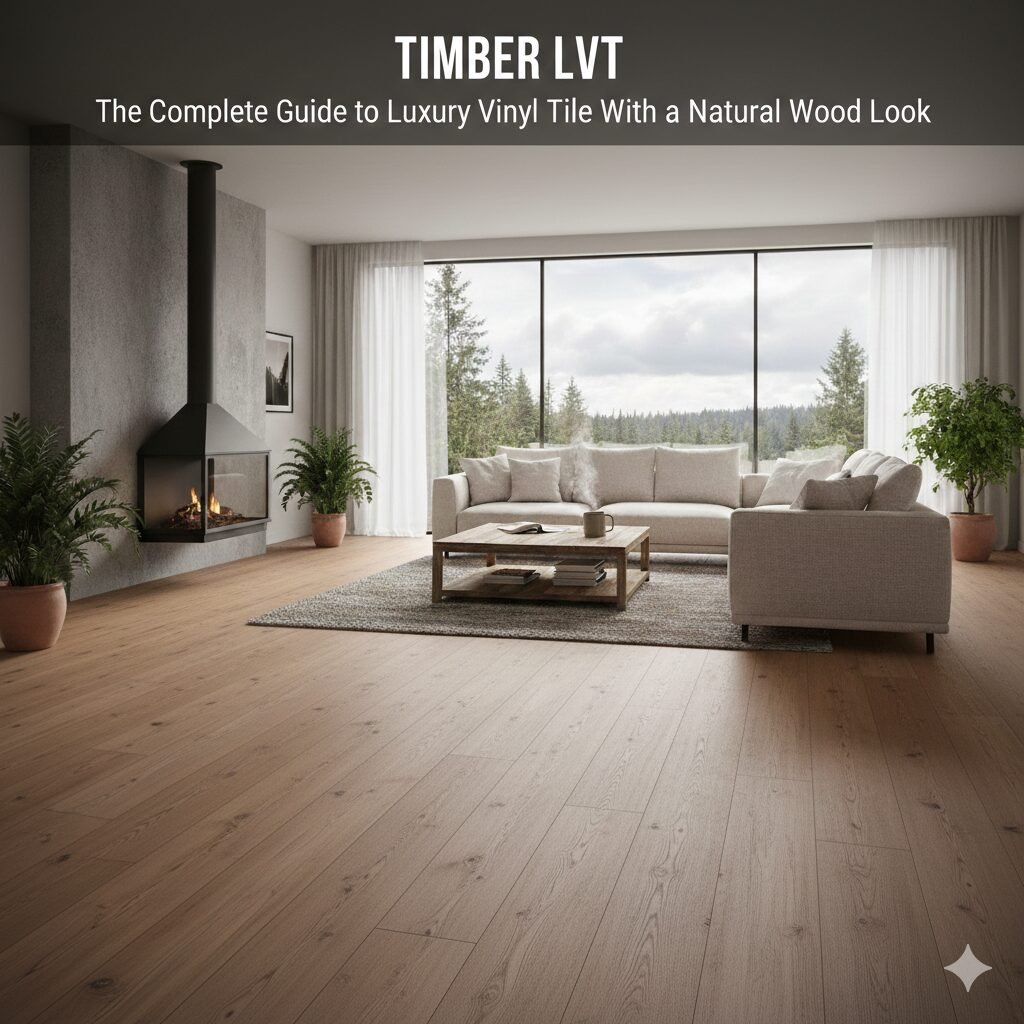
Imagine walking into a room where the floor looks and feels like genuine aged timber — rich grain patterns, warm tones, subtle knots — but underneath that beautiful surface lies a material that laughs at water damage, shrugs off heavy foot traffic, and costs a fraction of what real hardwood demands. That is exactly what timber LVT delivers, and it is quickly becoming the flooring of choice for homeowners, designers, and commercial property owners across the UAE and worldwide.
Timber LVT, short for timber-look Luxury Vinyl Tile, combines advanced printing technology and textured surface engineering to replicate the authentic appearance of natural wood — while offering practical advantages that genuine timber simply cannot match. From beachfront apartments in Dubai Marina to bustling restaurant floors in Downtown Abu Dhabi, this flooring solution handles everything modern life throws at it.
But with dozens of products on the market and plenty of confusing jargon, how do you know which timber LVT is right for your project? What separates a premium product from a cheap imitation? And how should it be installed and maintained?
This guide answers every question. Whether you are a first-time homeowner exploring flooring options or a seasoned contractor comparing materials, you will find everything you need right here.
What Exactly Is Timber LVT?
Let’s start with a clear definition, because the flooring industry is filled with acronyms that can confuse even experienced buyers.
LVT stands for Luxury Vinyl Tile. Despite the word “tile” in its name, LVT comes in both tile and plank formats. When the product is designed to look like natural wood, it is commonly referred to as Luxury Vinyl Plank (LVP) or, more descriptively, timber LVT.
The Anatomy of a Timber LVT Plank
Every quality timber LVT plank consists of multiple engineered layers:
| Layer | Function |
|---|---|
| UV Coating | Protects against fading and yellowing from sunlight exposure |
| Wear Layer | A transparent polyurethane or ceramic-bead layer that resists scratches, scuffs, and stains |
| Decorative Film | A high-definition photographic print that replicates the look of real timber grain |
| Vinyl Core | The structural backbone — available in flexible (glue-down), WPC (Wood Plastic Composite), or SPC (Stone Plastic Composite) formats |
| Backing Layer | Provides stability, cushioning, and sometimes built-in underlayment for sound absorption |
The core type is where the biggest performance differences emerge:
- Flexible (Glue-Down) LVT: Thin, flexible planks adhered directly to the subfloor. Excellent for commercial applications and irregular subfloors.
- WPC Core (Wood Plastic Composite): A foamed core that offers warmth, cushioning, and superior sound absorption. Ideal for residential comfort.
- SPC Core (Stone Plastic Composite): A rigid, dense core made with limestone powder. Extremely stable, dent-resistant, and perfect for high-traffic areas and temperature fluctuations — making it particularly popular in Dubai and the wider UAE.
Why Timber LVT Has Become So Popular
The global LVT flooring market was valued at approximately USD 24.6 billion in 2023 and is projected to grow at a compound annual growth rate (CAGR) of around 7.2% through 2030, according to Grand View Research (2024). Timber-look variants dominate this market. Here is why:
1. Unmatched Water Resistance
Unlike real hardwood or even laminate flooring, luxury vinyl tile is inherently waterproof at the plank level. The vinyl core does not absorb moisture, swell, or warp. This makes timber LVT suitable for:
- Kitchens
- Bathrooms
- Laundry rooms
- Basements
- Commercial spaces with heavy cleaning routines
The Resilient Floor Covering Institute (RFCI) notes that vinyl flooring’s moisture resistance makes it one of the most versatile hard-surface flooring categories available today (RFCI, 2023).
2. Realistic Wood Aesthetics
Modern timber LVT has evolved dramatically from the cheap vinyl floors of the 1990s. Today’s products feature:
- Embossed-in-register (EIR) textures where the surface texture perfectly aligns with the printed grain
- Micro-bevelled edges that create natural shadow lines between planks
- Variation technology that ensures no two planks look identical — just like real wood
- Wide-plank and long-plank formats that mimic premium hardwood installations
Standing in a room with high-quality timber LVT, most people genuinely cannot tell it apart from real wood without getting on their hands and knees to inspect it closely.
3. Comfort Underfoot
Vinyl has a natural give that makes it more comfortable to stand on for extended periods compared to ceramic tile, stone, or even laminate. WPC-core timber LVT, in particular, provides a cushioned feel that families with young children especially appreciate.
4. Sound Absorption
Hard flooring surfaces can create echo and noise problems, especially in apartments and multi-story buildings. Timber LVT — particularly products with attached acoustic underlayment — significantly reduces impact noise (footsteps, dropped objects) compared to laminate or tile.
The International Organization for Standardization (ISO) uses the IIC (Impact Insulation Class) rating to measure impact sound performance. Many premium timber LVT products achieve IIC ratings of 60 or higher, meeting or exceeding most building codes and HOA requirements for upper-floor installations (ISO 10140, 2021).
5. Design Flexibility
Timber LVT is available in an extraordinary range of wood species looks, including:
- Oak (light, medium, and dark variations)
- Walnut
- Hickory
- Teak
- Pine
- Maple
- Reclaimed and barnwood styles
- Chevron and herringbone patterns
This variety allows you to achieve virtually any design vision — from Scandinavian minimalism to rustic farmhouse to sleek contemporary — without the sourcing challenges and cost premiums of exotic hardwoods.
Timber LVT vs. Other Flooring Options: An Honest Comparison
Making the right flooring choice means understanding how timber LVT stacks up against the alternatives. Here is a detailed comparison:
| Feature | Timber LVT | Solid Hardwood | Engineered Wood | Laminate | Ceramic Tile |
|---|---|---|---|---|---|
| Avg. Cost (AED/sq ft) | 18–55 | 60–150+ | 45–100 | 15–45 | 25–80 |
| Water Resistance | Excellent (waterproof) | Poor | Moderate | Moderate | Excellent |
| Scratch Resistance | High | Low–Moderate | Moderate | High | Very High |
| Comfort Underfoot | Very Good | Good | Good | Moderate | Cold and hard |
| Sound Absorption | Good–Excellent | Moderate | Moderate | Poor–Moderate | Poor |
| Installation Ease | Very Easy | Difficult | Moderate | Easy | Difficult |
| Maintenance | Very Low | High | Moderate | Low | Low |
| Refinishing | No | Yes (multiple times) | Yes (1–2 times) | No | No |
| Lifespan | 15–30 years | 50+ years | 25–40 years | 15–25 years | 30–50 years |
| Pet Friendly | Excellent | Poor | Moderate | Good | Good |
| Underfloor Heating | Yes (most products) | Limited | Yes | Yes (most) | Yes |
The Bottom Line
Timber LVT wins on practicality. If you want real wood’s aesthetic without its vulnerabilities — especially in moisture-prone areas, high-traffic zones, or hot climates like the UAE — LVT flooring is the clear frontrunner. Solid hardwood wins on longevity and the prestige of authentic material, but the gap in visual realism continues to narrow every year.
How to Choose the Best Timber LVT for Your Space
With hundreds of products available, narrowing down your options can feel overwhelming. Here are the critical factors that separate excellent timber LVT from mediocre products:
1. Wear Layer Thickness
The wear layer is your floor’s armour. It determines how well the surface resists scratches, scuffs, and wear over time.
| Wear Layer Thickness | Best For |
|---|---|
| 6–12 mil | Light residential (bedrooms, guest rooms) |
| 12–20 mil | General residential (living rooms, kitchens) |
| 20–28 mil | Heavy residential + light commercial |
| 28–40+ mil | Heavy commercial (retail, hospitality) |
Expert recommendation: For most homes in the UAE, aim for at least 20 mil wear layer thickness. The investment pays off in longevity, especially in homes with pets, children, or frequent entertaining.
2. Core Type and Thickness
As mentioned earlier, the three main core types are flexible, WPC, and SPC. Here is a quick decision guide:
- Choose SPC if you need maximum stability, dent resistance, and performance in areas with temperature swings (ideal for Dubai’s climate where rooms transition between intense AC and outdoor heat).
- Choose WPC if comfort and sound absorption are your top priorities (ideal for bedrooms and family rooms).
- Choose Glue-Down if you need the lowest profile, are covering a large commercial area, or have an uneven subfloor.
Total plank thickness typically ranges from 2mm (glue-down) to 8mm+ (rigid core with attached underlayment). Thicker is generally better for residential use.
3. Plank Dimensions
Wider and longer planks create a more premium, contemporary look and make rooms feel larger. Common timber LVT dimensions include:
- Width: 6 inches (standard) to 9+ inches (wide plank)
- Length: 36 inches (standard) to 72+ inches (long plank)
If your budget allows, wide-plank timber LVT dramatically elevates the visual impact.
4. Surface Texture
For the most realistic timber appearance, look for:
- EIR (Embossed in Register): Texture matches the printed grain — the gold standard
- Hand-scraped: Irregular, artisan-style surface
- Wire-brushed: Subtle linear grooves that mimic real brushed wood
- Matte finish: More natural than high-gloss; also hides minor imperfections better
5. Locking System Quality
Click-lock systems vary in quality. Premium products use patented systems like Uniclic, Välinge, or I4F that create tight, gap-free joints. Cheaper products may use generic locking mechanisms that can separate over time, especially under heavy use.
6. Certifications to Look For
Quality and safety certifications provide peace of mind:
- FloorScore: Certifies low VOC emissions (important for indoor air quality)
- GREENGUARD Gold: Even stricter VOC standards, suitable for schools and healthcare
- ISO 14001: Environmental management certification
- CE Marking: European conformity standards
- Phthalate-free certification: Ensures the vinyl is free of harmful plasticizers
At Modenex Decor Dubai, we stock timber LVT collections from manufacturers who meet these rigorous standards, giving our customers confidence in both quality and safety.
Step-by-Step Installation Guide for Timber LVT
Proper installation is just as important as choosing the right product. Here is a comprehensive walkthrough:
Pre-Installation Preparation
Step 1: Acclimate the Product
Store the timber LVT planks in the installation room for at least 48 hours before beginning. Keep them at room temperature (18–27°C). This is especially important in the UAE, where warehouse storage temperatures can differ dramatically from air-conditioned interior spaces.
Step 2: Inspect Every Plank
Before installation, inspect each plank under good lighting for:
- Colour consistency
- Surface defects
- Damaged edges or locking mechanisms
Manufacturers typically do not accept claims for defects that are visible after installation.
Step 3: Prepare the Subfloor
The subfloor must meet these standards:
- Clean: Free of dust, debris, adhesive residue, and contaminants
- Dry: Concrete subfloor moisture should not exceed 3 lbs/1,000 sq ft/24 hours (measured via calcium chloride test) or 75% relative humidity (measured via in-situ probe per ASTM F2170)
- Flat: Deviations must not exceed 3mm over a 3-metre straightedge
- Structurally sound: No cracks, loose tiles, or unstable areas
If your subfloor is concrete, apply a moisture barrier or use a product with built-in moisture protection.
Installation Process (Click-Lock / Floating Method)
Step 4: Plan the Layout
- Measure the room and calculate the centre line
- Plan for a balanced layout — avoid narrow plank strips along walls
- Leave a minimum 6mm expansion gap along all walls, columns, and fixed objects
- Run planks parallel to the longest wall or toward the main light source for the most natural appearance
Step 5: Install the First Row
- Begin in the left corner of the room
- Place spacers along the starting wall
- Lay the first plank with the tongue side facing the wall
- Connect subsequent planks end-to-end by angling and clicking them into place
Step 6: Continue Subsequent Rows
- Stagger end joints by at least 15–20cm (6–8 inches) between adjacent rows
- Angle each plank into the previous row’s groove, then press down to lock
- Use a tapping block (never a hammer directly on the plank) for tight fits
- Cut planks using a utility knife (score and snap) or a vinyl plank cutter
Step 7: Install the Final Row
- Measure and cut the last row of planks to fit
- Use a pull bar to engage the locking mechanism against the wall
- Maintain the expansion gap
Step 8: Finishing Touches
- Remove all spacers
- Install baseboards, quarter-round moulding, or scotia to cover expansion gaps
- Add transition strips where LVT meets other flooring types (T-bars, reducers, or end caps)
- Install door thresholds at room transitions
Glue-Down Installation (Alternative Method)
For glue-down timber LVT:
- Apply manufacturer-recommended adhesive to the subfloor using a notched trowel
- Allow the adhesive to become tacky (follow the open time specified)
- Press planks firmly into the adhesive
- Use a 45kg floor roller to ensure full adhesive transfer
- Clean any adhesive squeeze-out immediately
Glue-down installations are more permanent, provide a thinner profile, and offer superior stability in large open areas.
Maintenance Guide: Keeping Your Timber LVT Beautiful for Decades
One of timber LVT’s greatest selling points is its minimal maintenance needs. Follow these practices to maximize your floor’s life and appearance:
Daily and Weekly Care
- Sweep, dust mop, or vacuum regularly to remove grit and debris (grit acts like sandpaper under foot traffic)
- Damp mop weekly with clean water or a pH-neutral vinyl floor cleaner
- Wipe up spills promptly — while LVT is waterproof, prolonged standing water can seep into seams on floating installations
Monthly Deep Cleaning
- Use a manufacturer-approved floor cleaner (avoid generic “all-purpose” cleaners)
- For stubborn marks, apply cleaner directly to the spot and gently scrub with a soft nylon brush
- Rinse thoroughly and allow to air dry
Protective Practices
- Felt pads under all furniture legs — check and replace every 6 months
- Castor cups or chair mats under rolling office chairs
- Walk-off mats at all exterior entries to trap dirt and moisture
- Window treatments to reduce direct UV exposure (some UV can cause colour fading over time, even with UV-protective coatings)
- Keep pet nails trimmed to prevent surface scratching
Best Applications for Timber LVT
Timber LVT’s versatility means it works in almost every setting. Here are specific applications where it truly shines:
Residential Applications
- Open-plan living areas: Seamless timber look flowing through kitchen, dining, and living spaces
- Bedrooms: Warm, comfortable underfoot with excellent acoustic properties
- Bathrooms: Fully waterproof option eliminates the cold feel of ceramic tiles
- Children’s play areas: Soft, safe, and easy to clean
- Rental properties: Durable enough to withstand tenant turnover, attractive enough to command premium rents
Commercial Applications
- Restaurants and cafés: Handles spills, foot traffic, and frequent cleaning effortlessly
- Retail stores: Premium appearance that creates a welcoming shopping environment
- Offices: Professional look with acoustic benefits for focused work environments
- Healthcare facilities: Hygienic, easy to maintain, and comfortable for staff standing long hours
- Hotels and serviced apartments: Luxury wood-look aesthetic at a manageable cost per room
Specific Advantages for UAE Projects
In the UAE, timber LVT offers particular advantages:
- Climate resilience: SPC-core LVT remains dimensionally stable despite extreme heat outside and air conditioning inside
- Moisture immunity: Essential in coastal cities like Dubai, Abu Dhabi, and Sharjah where humidity levels can spike
- Fast installation: Floating click-lock systems minimize project downtime — critical for commercial renovations
- Underfloor heating compatibility: Many UAE villas and penthouses feature radiant heating, and timber LVT works seamlessly with these systems
Timber LVT Design Inspiration: Trending Styles for 2025
If you are looking for specific design direction, here are the top timber LVT trends dominating interiors this year:
1. Wide-Plank Blonde Oak
Light, airy, and effortlessly modern. Blonde oak timber LVT makes spaces feel larger and brighter — perfect for compact Dubai apartments.
2. Herringbone and Chevron Patterns
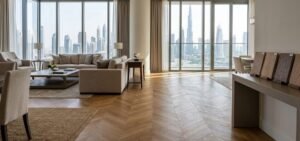
Once exclusive to premium hardwood installations, herringbone and chevron patterns are now available in click-lock LVT formats. These patterns add architectural drama to entryways, dining rooms, and feature walls.
3. Smoked and Charred Wood Looks
Dark, dramatic, and incredibly sophisticated. Smoked timber LVT creates a moody, luxurious atmosphere in bedrooms, home theatres, and upscale hospitality spaces.
4. Reclaimed and Weathered Finishes
The “imperfect beauty” trend continues to grow. Timber LVT with saw marks, nail holes, and colour variations delivers a reclaimed-wood aesthetic without the inconsistencies and insect risks of actual reclaimed timber.
5. Mixed-Width Planks
Installing two or three different plank widths creates an organic, custom-crafted look that mimics traditional European flooring installations.
Frequently Asked Questions About Timber LVT
Is timber LVT truly waterproof?
Yes, the vinyl material itself is 100% waterproof. However, on floating (click-lock) installations, water can potentially seep between plank seams if it sits for extended periods. Glue-down installations provide a more watertight surface. For wet areas like bathrooms, look for products with sealed or waxed edges and ensure tight, gap-free installation.
Can timber LVT be installed over existing flooring?
In many cases, yes. Timber LVT can be installed over:
- Existing vinyl
- Ceramic or porcelain tile (if level and in good condition)
- Concrete
- Plywood
It should not be installed over carpet, floating laminate floors, or any unstable surface. Always consult the manufacturer’s subfloor guidelines.
How does timber LVT handle underfloor heating?
Most SPC and WPC timber LVT products are compatible with underfloor heating systems. The key requirement is that the surface temperature should not exceed 27°C (80°F). Always verify compatibility with the specific product manufacturer and allow the heating system to run for at least two weeks before installation to stabilize the subfloor.
Does timber LVT look fake?
Not if you choose a quality product. Premium timber LVT with EIR texture, realistic colour variation, and micro-bevelled edges is virtually indistinguishable from real wood to the naked eye. The trick is to avoid the cheapest products, which often have repetitive patterns, flat textures, and unrealistic colour uniformity.
Is LVT flooring safe for homes with children?
Quality LVT flooring certified as phthalate-free and meeting FloorScore or GREENGUARD Gold standards is considered safe for residential use, including homes with children. These certifications verify that VOC emissions meet strict health-based standards. The US Environmental Protection Agency (EPA) provides guidance on selecting low-emission building materials for healthier indoor environments (EPA, 2023).
How much does timber LVT cost in Dubai?
Prices vary based on quality, core type, wear layer thickness, and brand. As a general guide:
| Quality Level | Approximate Cost (AED/sq ft) |
|---|---|
| Budget | 15–25 |
| Mid-Range | 25–40 |
| Premium | 40–60+ |
Installation costs typically add AED 8–20 per square foot, depending on the method and subfloor condition.
Can I install timber LVT myself?
Click-lock timber LVT is one of the most DIY-friendly flooring products available. With basic tools, careful subfloor preparation, and patience, most handy homeowners can complete a room in a weekend. Glue-down installation is more complex and generally recommended for professional installers.
Sustainability Considerations
As environmental awareness grows, it is worth addressing timber LVT’s sustainability profile honestly.
Challenges:
- Vinyl (PVC) is derived from petroleum and chlorine
- Manufacturing processes consume significant energy
- End-of-life disposal can be problematic if not recycled properly
Progress:
- Leading manufacturers are investing in recycled content (some products now contain up to 50% recycled materials)
- Closed-loop recycling programs allow old LVT to be reclaimed and reprocessed
- Phthalate-free formulations have become industry standard among premium brands
- Products certified under ISO 14001 demonstrate commitment to environmental management
- Choosing LVT over hardwood reduces demand on natural forests
When selecting timber LVT, prioritize manufacturers who demonstrate transparent sustainability practices and hold recognized environmental certifications.
Conclusion
Timber LVT has earned its place as one of the most practical, versatile, and beautiful flooring solutions available today. It captures the warmth and character of natural wood while offering waterproof performance, exceptional durability, easy installation, and low maintenance — advantages that real timber simply cannot match in every situation.
Whether you are designing a serene bedroom retreat, a bustling family kitchen, a chic café, or a high-traffic retail space, timber LVT adapts to your needs without compromise. And in challenging climates like the UAE — where heat, humidity, and air conditioning create demanding conditions for flooring — LVT flooring provides the dimensional stability and moisture resistance that keeps your investment looking beautiful year after year.
The key to a successful project is choosing the right product (appropriate wear layer, core type, and certifications), preparing your subfloor properly, and following manufacturer guidelines for installation and maintenance.
At Modenex Decor Dubai, we carry an extensive collection of premium timber LVT and luxury vinyl tile options sourced from trusted global manufacturers. Our flooring specialists can help you select the perfect style, texture, and specification for your unique project — whether residential or commercial.
Visit Modenex Decor Dubai today to explore our timber LVT collections and take the first step toward floors that combine lasting beauty with effortless performance.